Team Corporate Portraits in Liverpool: Planning a Headshot Day That Doesn’t Derail the Office

Published on Tue Nov 5, 2024 by
David J Colbran
Last Updated on Wed Nov 4, 2026
Why One Team Session Works Better Than Separate Bookings
Getting an entire team photographed on the same day sounds straightforward. Pick a date, book a photographer, and let everyone take their turn in front of the camera. In practice, the photography is rarely where things go wrong. The difference between a day that runs smoothly and one that becomes a scheduling headache almost always comes down to planning: who is where, at what time, and how little of the working day it takes up.
If you are considering business portraits in Liverpool, Merseyside or Greater Manchester for your organisation, whether for a website refresh, a new LinkedIn presence or a set of profiles for a tender document, this guide explains what actually needs organising and how to get it right the first time.
Consistent Team Headshots: The Benefits of One Booking
The first decision is whether to arrange one session for the whole team or leave each person to book their own. Individual bookings can look more flexible on paper, but they tend to produce a patchwork of results. Different photographers, different studios, different lighting and different editing styles all show up the moment those images sit side by side on a team page.
Booking one photographer for a single day removes that problem entirely. Everyone is photographed with the same lighting, the same background and the same approach to framing and retouching. The result looks like a team rather than a collection of individuals who happened to be photographed in the same year. That consistency matters far more than most people expect, particularly on a company website, in a pitch deck or on a LinkedIn company page where several headshots appear together.
There are practical advantages too. One booking means one invoice, one point of contact and one set of agreed deliverables. New starters and latecomers can be added to the day without negotiation. And because the photographer is set up once and stays set up, the cost per person is typically lower than a series of separate studio visits. Like most photographers, while my fee is fairly high for a quick visit - I offer a great discount for example on a full day rate.
For many firms, team corporate portraits in Liverpool are as much a branding decision as a photographic one. A coherent set of images signals a coherent business, and a shared session is the simplest way to achieve it.
What actually needs planning
The photography itself is usually the fastest part of the day. A confident photographer working with a simple lighting set-up can capture a strong business portrait in a few minutes. What takes real planning is the timetable around it.
Give each person a specific slot
The single most effective thing you can do is replace vague windows with individual time slots. "Sometime in the morning" invites queues, idle waiting and colleagues drifting in and out of the room. A named slot, ideally ten to fifteen minutes, means each person knows exactly when to arrive, and the photographer can keep a steady rhythm. Share the timetable in advance and send a reminder the day before. A short message with the time, the location and a note on what to wear removes most of the last-minute confusion.
Build in a buffer
Somebody's meeting will overrun. Someone will be on a call with a client that cannot be moved. A well-planned schedule builds in a small buffer, perhaps a short gap every hour or a spare slot at the end of each half-day, so that one delay does not cascade through the whole timetable.
It also helps to nominate one person in the team as the day's coordinator. Their job is simple: send people along when it is their turn, and quietly rearrange the order if someone is unavailable. A coordinator or office manager who knows the team's diaries is absolutely key to getting this right.
Plan for the people who are not in the office
Hybrid working has made this more complicated. If some of your team work from home on certain days, agree the date with that in mind, or offer two shorter sessions on different days so nobody is left out. Headshots for your team in Liverpool should include everyone, and a gap in the team page where one person should be is surprisingly noticeable. Perhaps schedule the photoshoot during an 'awayday' when colleagues are all gathered together. I have brought my mobile studio to conferences, awaydays and trade shows in the past.
Choosing the right space
A good space is the second thing that decides how the day goes. It does not need to be large, but it does need to be set aside properly.
Why not just use a corner of the office?
It is tempting to set up in a quiet corner of the open-plan office. In reality, that rarely works. Colleagues walk past, conversations carry, and people feel self-conscious being photographed in front of their peers. The result is stiff expressions and rushed sessions.
A separate room, such as a meeting room, a spare office or a boardroom, gives people the privacy to relax. Even a few minutes of calm makes a visible difference to how natural a portrait looks.
What the room needs
The ideal space has enough depth for a photographer to position the subject comfortably away from the background, a clear wall or a spot where a backdrop can be set up, and room for a small amount of equipment. At a minimum I suggest a space 2M x 5M in size. Natural light is not essential, as a photographer working with controlled lighting can create consistent results in almost any room. But an ability to turn off light rooms and close blinds is - bright morning sunshine is lovely but can cause big technical issues to creating a consistent set of images.
It also helps to have a spot nearby where the next person can wait, a mirror for last-minute checks and access to a power socket. These small details keep the session moving.
If you are unsure about office suitability, let me know, I am more than happy to do a pre-shoot visit to figure out the best space.
I have a mobile studio ideal for on-location studio-style business portraits, and have completed dozens of shoots.
Keeping a busy team moving
Most teams cannot afford to lose people for an extended period of time. That is the main reason headshot days are often postponed: they feel like a significant disruption.
A well-run session removes that concern. When the timetable is built around short, well-timed slots, each person is away from their desk for ten or fifteen minutes rather than a whole afternoon. The rest of the day carries on around them.
A few approaches help to keep things on track:
- Stagger the order sensibly. Put the people with the least flexible diaries at the start or end of the day, and keep the middle for those who can move more easily.
- Group by department where possible. If one department has a deadline, photograph them first or last so the disruption is contained.
- Keep the flow continuous. The next person should always be ready, so the photographer is never waiting and the room never sits empty.
- Allow a short break for the photographer. A pause midway helps maintain focus and consistency, and gives space to catch up if the schedule has slipped.
With this kind of structure, even a larger team can be photographed within a morning or an afternoon, with minimal impact on productivity. With my experience and your planning we can complete a shoot efficiently.
Preparing your team
The smoothest days are those where people turn up knowing what to expect. A short briefing email goes a long way.
Cover the essentials: when and where to arrive, how long it will take, and what to wear. Solid, simple colours generally photograph better than busy patterns, and it helps to avoid anything that might date quickly. Suggest that people bring a spare top or jacket if they are unsure, and remind them that there is no need for anything elaborate.
While I am no fashion guru, I've written a post about the best clothes to wear for portrait headshots.
It is also worth setting expectations about retouching and selection. Agree in advance whether each person will choose their own favourite image or whether you will make the selection centrally, and be clear about how many final images each person will receive. This avoids a long tail of follow-up emails after the day itself. For groups I usually supply 6 fully edited images per person.
For people who dislike being photographed, which is more of the team than you might think, a calm, unhurried session makes all the difference. A good photographer will guide each person through posing and expression, so nobody needs to feel they have to know what to do.
After the day: delivery and usage
The session is only part of the process. Before the day, agree how and when the final images will be delivered, in what formats and sizes, and how they can be used. Headshots are typically needed for a website, LinkedIn, email signatures, press materials and internal directories, so it is worth confirming that the licence covers all of these. I offer a licence framework that covers all usages within your organisation, so totally flexible.
A realistic turnaround for edited images is usually a matter of days rather than weeks, but it is worth agreeing in advance, particularly if the photographs are needed for a launch date or a presentation. I aim to get everything completed with 48 hours of the shoot.
What this means if you are planning one for your team
If you are organising business portraits in Liverpool for your team, the photography is the easy part. Getting the timetable right is what decides whether the day runs smoothly: individual time slots, a proper space set aside, a sensible buffer and minimal disruption to the working day.
A little preparation up front, including a clear schedule, a named coordinator and a short briefing for the team, turns a potentially disruptive day into a calm and efficient one. And the reward is a consistent, professional set of images that represents your business well for years to come.
If you would like to discuss a team headshot day, get in touch to talk through your numbers, your location and your preferred timings. A short conversation at the start is usually all it takes to build a schedule that works for everyone.
Why choose me as your portrait photographer?
In addition to receiving stunning photos ....
- The offer is a flat rate with no hidden fees. What I quote is what I will charge you.
- I have full Public & Products Liability insurance and Professional Indemnity insurance at £10M per claim - so we are both covered if I knock something over with a tripod, or someone trips on my bag.
- Fast turn-around - usually a first selection to view online in 48 hours of the shoot.
- Totally professional Photoshop retouching - simple fixes, blemish removal, teeth whitening all included as standard
- Digital copies of high-res images, and web ready images at the right size for your website or social media channels.
- No hidden fees for equipment or travel - let me know where you are based and I will give you a fixed quote. I am based in Liverpool but travel across the UK if required.
- Image delivery via either Dropbox or WeTransfer - or direct to your servers if required.
- Unlimited usage - I will deliver a range of portraits for loads of different uses - formal portraits, commercial head and shoulders images, through to more relaxed portraiture in offices or outside. You can use them wherever you need.
If you have read this far, I hope you understand that planning with me is easy. The photoshoot day is comfortable, professional, productive and above all fun. Finally the delivery phase is seamless.
My aim is not to photograph perfect people, it is to photograph real people - making people relaxed and at ease in front of the camera. Trust my experience and expertise.


Getting in touch
or call on 07810321634.
If I can't speak right away we can schedule something in / Teams / Zoom etc.
Or connect with me on LinkedIn https://www.linkedin.com/in/davidjcolbran/
Tags: portraits, business, commercial, corporate, headshots, portrait
Author: David J Colbran
- < Previous news post
- Corporate Photography Event and Conference Shot List Next news post >
- A story of my Liverpool life by Mike McCartney
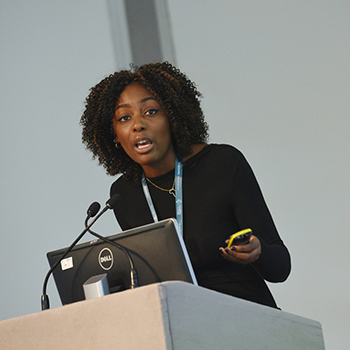
Conference Photography at the Lowry
Heading down the M62 at dawn again for another couple of super busy days (and one late evening) with a repeat conference photography client.
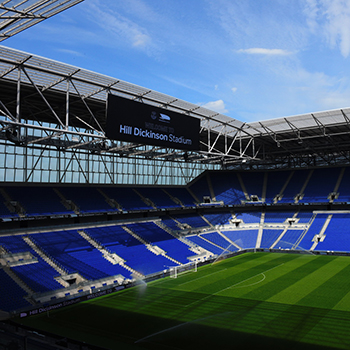
Corporate Event Photographer Liverpool - Hill Dickinson Stadium
There are worse places to photograph a corporate event than a brand-new stadium on the Liverpool waterfront. Read about a day capturing team building and networking at the Hill Dickinson.

Photographer at the Labour Party Conference
Another busy year working for an organisation that advises on public affairs, government relations and stakeholder engagement across Australia, the UK and New Zealand.
Fiona, Business owner at Wellbeing Therapies by Fiona.