30 Tips for Better Conference Photography

Published on Mon Dec 22, 2025 by
David J Colbran
Last Updated on Thu Jul 23, 2026
Everything you need to know to capture events like a professional
Whether you're a seasoned photographer stepping into the world of events or a marketing professional tasked with documenting your company's next big conference, capturing a live event successfully is a skill that takes preparation, technique, and instinct. The tips below cover everything from camera settings and gear to composition, etiquette, and storytelling — so you can walk away with a gallery that truly does justice to the event.
1. Do Not Bother Participants
Conference attendees are there to learn and network, not to pose for photos. Move quietly through the space, avoid interrupting conversations or presentations, and use a telephoto lens, when possible, to capture candid moments from a distance. The best conference photos feel natural and unposed — they tell a story without disrupting it.


2. Be Prepared in Advance
Research the event schedule, venue layout, and key speakers before you arrive. Know which sessions are most important to capture, scout the location ahead of time to identify good vantage points, and make sure all your equipment is charged, formatted, and ready to go. Preparation is the difference between missing the money shot and getting it.
3. Get Acquainted with People You Are Going to Photograph
Introduce yourself to the event organisers, speakers, and key attendees before the event kicks off. When subjects know who you are and why you're there, they become more comfortable with the camera nearby. A quick handshake and a friendly explanation of your role can transform stiff, camera-shy subjects into relaxed, natural ones.
4. Lifestyle Conference Photos Are Better
Forget stiff, posed group shots where everyone stares awkwardly into the camera – of course there will always be a few required. But lifestyle photography captures people in the flow of genuine activity — laughing over lunch, furiously taking notes, or engaged in a lively hallway discussion. These authentic moments convey the energy and culture of the event far more powerfully than any staged photo can.

5. Pay Attention to the Lighting
Conference venues are notoriously challenging for lighting — a mix of harsh stage spotlights, dim ambient lighting, and bright projection screens can wreak havoc on your exposures. Arrive early to assess the light sources, adjust your camera settings accordingly, and identify the best-lit spots in the room. Make friends with the Audio-Visual team and see what can be changed – often they can raise the house lights during question and feedback periods. If the lighting is poor and you can't change it, reposition yourself to make the most of what's available.
6. Shoot from Creative Angles
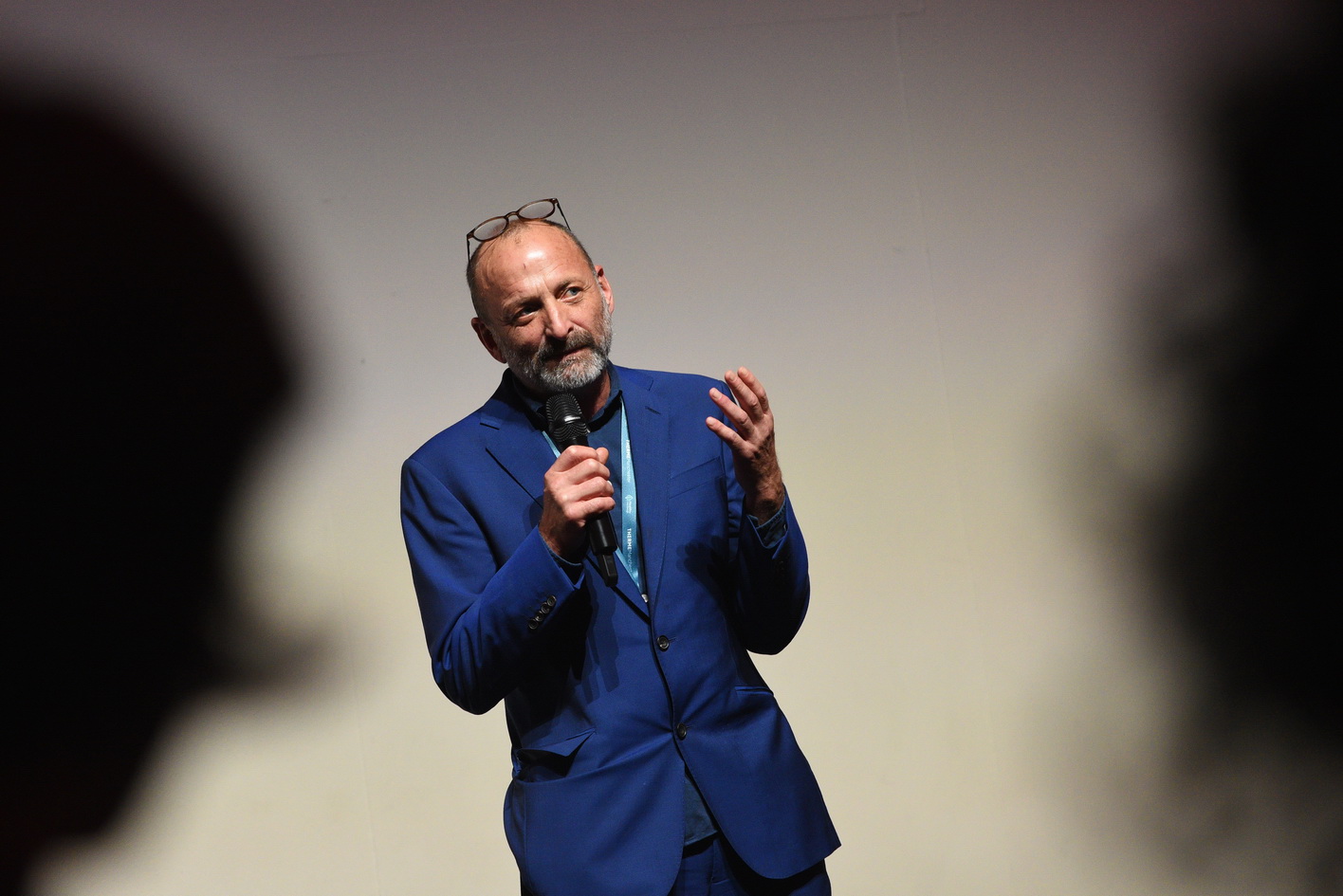
Don't just stand at the back of the room and shoot straight ahead — that's what everyone else does. Get low to the ground for a dramatic perspective, shoot from the side of the stage to capture both the speaker and the audience, or find an elevated position that reveals the full scale of the event. Creative angles transform ordinary conference moments into compelling visual stories. Shoot between heads to create a busy engaging image.
7. Keep an Eye on the Background
A great subject can be ruined by a cluttered or distracting background. Before you press the shutter, take a second to scan behind your subject for exit signs, tangled cables, stray cups, or people mid-blink. A clean background keeps the focus where it belongs. Use a wide aperture to blur backgrounds when you can't physically move to a better position. Of course some distractions can be removed in post – but getting it correct in-camera cuts down on time in the studio.
8. Use Composition Techniques
Apply classic composition rules to elevate your shots: use the rule of thirds to place subjects off-centre, look for leading lines like aisles or stage edges to draw the eye, and use natural frames like doorways or windows to add depth. Strong composition is what separates a snapshot from a photograph worth publishing.

9. Take as Many Pictures as Possible
OK, don’t go full machine-gun. But conference moments are fleeting — a great expression lasts a fraction of a second, and you rarely get a second chance. Shoot in bursts during key moments like applause, panel discussions, and networking interactions. The more frames you capture, the better your odds of finding that one perfect shot where everyone looks great and the energy is just right.
10. Leave the Editing to a minimum
Resist the urge to over-process your images with heavy filters or aggressive retouching. Keep adjustments subtle — enhance what's already there rather than trying to fix fundamental problems in post. If it is a venue with super high ceilings and mixed light sources with harsh sodium lights, adjust in-camera concentrating on the subjects.
11. Wide Conference Shot
Every conference gallery needs at least one sweeping wide shot that captures the scale of the event — the full auditorium, the packed trade show floor, or the panoramic view of the main stage. These establishing shots give context to all the close-up images and are extremely valuable to event organisers for marketing future events. Use a wide-angle lens and find an elevated position for maximum impact. Of course, if not busy, the organisers won’t be publishing an image with empty chairs, but it will be a useful visual recording for planning future events.


12. Photos of Speakers
Speakers are the stars of any conference, so dedicate focused time to capturing them well. Aim for sharp shots of their face during moments of expression — mid-sentence, smiling, or gesturing enthusiastically. Try to capture them in relation to their slides or the audience to add context. A compelling speaker portrait is often the most-used image from any conference shoot. And often sent by the marketing team to participants as a thank you.


13. Get Closer
As the legendary photojournalist Robert Capa said, 'If your photos aren't good enough, you're not close enough.' Getting physically or optically closer fills the frame with your subject, eliminates distracting elements, and produces images with far more emotional impact. Whether you move your feet or zoom in with a lens, closing the distance almost always improves the shot.

14. Behind the Scenes
Some of the most interesting and shareable conference photos happen away from the main stage — speakers reviewing their notes backstage, the registration team greeting delegates, organisers troubleshooting AV issues, or exhibitors setting up their stands early morning. Behind-the-scenes event images give the audiences a peek at the effort that makes it all happen.


15. Characters and Interactions
Every conference has memorable characters — the passionate questioner at the microphone, the two old colleagues reuniting in the hallway, the first-time attendee wide-eyed with excitement. Seek out these human moments and the genuine interactions between people. Photos of real connection and emotion are the ones that resonate long after the event is over.


16. Look for Details
Don't overlook the small details that make the event unique: a creative name badge design, a beautifully arranged sponsor table, a sticky note wall covered in attendee ideas, or a speaker's hand mid-gesture. Detail shots add texture and variety to your gallery and help tell the complete story of the event beyond just the big moments.

17. Make Group Shots
Organised group photos — whether of the full team, a workshop cohort, or a panel of speakers — are always in high demand after the event. Plan for these in advance by identifying key groups and a good location with flattering light and a clean background. Brief your subjects quickly, arrange them efficiently, and take multiple frames to ensure everyone looks their best in at least one shot. From experience, the more people in the shot, the more likely it is that someone will be blinking – so always overshoot here.


18. Location
The venue itself is part of the event's story. Capture establishing shots of the exterior, the lobby, the main hall setup before attendees arrive and any distinctive architectural features. These location shots are essential for event recaps and future promotional materials, and they give the final photo gallery a strong sense of place.


19. Take Pre-Event Shots
Arrive well before the doors open and document the event being set up — the empty chairs arranged in neat rows, vendors arranging their booths, the stage being lit, registration tables being prepped. Pre-event photography captures a calm before the storm that contrasts beautifully with the energy of a full room, and it ensures you don't miss the first moments of arrivals.

20. Capture the Event Name
Make sure you get clear, well-composed shots of the event branding: the main stage backdrop, the entrance signage, sponsor banners, and branded materials. These images are essential for the organiser's records and marketing collateral, and they anchor the gallery with a clear identity. Shoot these early in the day before foot traffic and wear make them look less pristine. Essential details to help plan future events.

21. Use DSLRs
So on to the more technical stuff. For professional-quality conference photography, a DSLR or mirrorless camera is a must. These cameras offer superior low-light performance, faster autofocus, interchangeable lenses, and far greater manual control than smartphones or compact cameras. The difference in image quality — especially in the mixed and challenging lighting of a typical conference venue — is immediately apparent.
22. If You Have Budget, Use a Telephoto Lens
A telephoto lens (70-200mm is the conference photographer's classic) allows you to capture tight, intimate shots of speakers and attendees from across the room without disturbing anyone. The compression effect of a telephoto also produces beautifully blurred backgrounds that isolate your subject from distracting environments. If there's one lens upgrade worth investing in, this is it.
23. Use External Flash When Necessary
Conference venues often have lighting that's too dim for sharp, noise-free images, but pointing a flash directly at your subject produces harsh, unflattering results. An external flash mounted on a hot shoe and bounced off a ceiling or wall creates soft, even light that looks far more natural. Learn how to use your flash in manual or TTL mode to complement the ambient light rather than overpower it.
24. Bring All Extra Accessories with You
Running out of battery or memory cards mid-event is a preventable disaster. Pack at least two or three fully charged batteries, multiple memory cards with plenty of free space, lens cloths, a monopod or small tripod for low-light stability, and any other accessories relevant to your setup. A well-stocked camera bag means you can shoot confidently all day without worrying about equipment failures derailing the job.
25. Buy Reflectors and Diffusers
Portable reflectors and flash diffusers are inexpensive tools that can dramatically improve the quality of your light in tricky situations. A diffuser softens harsh flash output into something far more flattering, while a reflector can bounce available light back onto a subject's face to fill in unflattering shadows. Both fit easily in a camera bag and are worth their weight in great photos.
26. Exit Auto Mode
Auto mode might handle everyday snapshots, but conference photography demands more control than your camera's algorithm can provide. Learn to shoot in Aperture Priority mode to control depth of field, Shutter Priority mode to freeze motion during applause or fast-moving sessions, or full Manual mode for complete control when the lighting is consistent and predictable. Understanding your exposure triangle is non-negotiable for professional results.
27. Raise Your ISO
Indoor conference spaces are rarely bright enough for fast shutter speeds at low ISO settings. Don't be afraid to push your ISO to 1600, 3200, or even higher on modern cameras — a slightly grainy but sharp image is far more usable than a perfectly clean but motion-blurred one. Modern sensors handle high ISO remarkably well, and a little noise is easily managed in post-processing.
28. Remember About Aperture Settings
A wide aperture (f/1.8 to f/2.8) is your best friend in low-light conference settings — it lets in more light and creates that pleasing background blur that separates subjects from busy environments. However, be mindful that very wide apertures produce a very shallow depth of field, which can cause focus to miss the eyes on a moving subject. Find the balance that works for each shooting situation. If shooting with a wide aperture, over shoot and reset the auto focus every half a dozen frames.
29. Adjust White Balance
Conference venues mix multiple light sources — tungsten stage lights, fluorescent overheads, sodium bulbs, LED panels, and daylight from windows — each with a different colour temperature. Leaving your camera on Auto White Balance can result in inconsistent colour casts across your gallery. Set a custom white balance for the dominant light source in each area. And always shoot in RAW so you can correct it precisely in post-processing.
30. Shoot in RAW Image Format
RAW is essential in addition to JPEG. RAW files preserve all the data captured by the sensor, giving you far greater flexibility to recover highlights, lift shadows, correct white balance, and make precise adjustments in post-processing without any quality loss. Yes, the files are larger and require editing software, but for professional conference photography, the superior image quality is worth it.


Thank you for reading this far. I’m based in the North West of England, covering photography projects across Liverpool, Manchester, and beyond. If your organisation needs professional photography for upcoming conferences, events, PR campaigns, or corporate portraits, feel free to get in touch.
Read more about Conference Photography
Conference Photographer in Liverpool - working Spaces at The Spine
Labour Party Conference 2025 - photographers case-study
Three qualities that every strong event photographer must have
Times Higher Education Awards Edinburgh 2025 commercial conference photography
Getting in touch
or call on 07810321634.
If I can't speak right away we can schedule something in / Teams / Zoom etc.
Or connect with me on LinkedIn https://www.linkedin.com/in/davidjcolbran/
Tags: tips, conferences, conference, events, event, business, commercial, corporate
Author: David J Colbran
- < Previous news post
- Liverpool Photographers End of Year 2025 Review Images Next news post >
- The best clothes to wear for portrait headshots

Scanning city textures with a wand handheld scanner
I've been experimenting with a handheld portable scanner, gathering in raw, tactile urban visual textures on my travels in the last month.

Africa Oye is Back
I love Oye and the way it connects audiences from all corners of the globe. I have enjoyed chatting and connecting with artists, bands and fans on social media during and after the festival.

Why Hiring A Liverpool Conference Photographer for Your London Event Could Save You Money
When clients first hear that I'm based in Liverpool, the most common question I get before booking a London conference photography job is: "Won't that cost more, with travel and a hotel to factor in?"
Becky, Events Co-ordinator, Environment Media Group