Workflow for business photography and commercial photographers
Published on Wed Jan 21, 2026 by
David J Colbran
Last Updated on Tue Apr 28, 2026
Workflow for business photography
Having an efficient digital workflow is something that most professional photographers aspire to.
Why?
Well at the end of the day, getting images processed and delivered quickly and efficiently to clients is essential. And over the years, has retained some important clients becoming a key element in my business process.
Also from my point of view, it means less time in front of the computer and more time being creative, out and about, planning and marketing for the next shoot. But workflow is not a static thing - it is something I re-visit and re-evaluate on a regular basis. For example, I am so old, file delivery used to be via CDRs burnt and sent in the post - lol.
My approach ensures high-quality, consistent results (for example, brand consistency) while maximising efficiency and data security.
Of course, the first stage is pre-production and planning. This includes defining the project scope, researching locations and preparing all of my photography equipment and gear. I encourage clients to do some research, create mood boards, suggest some image examples and create a shot list.
I take a consistent, structured approach to business photography and the management of files after each photoshoot.
So on to the workflow steps.
Shooting in RAW format
The RAW file is often described as a "digital negative" and is the ultimate way to shoot business photography. It gives maximum flexibility to make adjustments to the colour temperature and exposure of an image in post-production - ensuring clients get the perfect image. This ensures brand-specific colour grading. My cameras shoot both RAW and JPGs at the same time - so zero delays if onsite rush images are required.
Copying the images on to a computer
Yep - fairly obvious - but ensuring I have a speedy connection and up to date software makes this easy. The cards go in to the reader and the files appear in my photo management software. Boom! Next stage is the culling and selection process. Where I review and select the best images, eliminating duplicates and poor shots.
Convert from RAW to JPG
Most clients however can't use RAW files and indeed very few photographers supply these 'digital negatives'. The next stage is conversion to JPGs and of course there are a few software and online options. Most photo management tools like Lightroom can batch convert images from each job. Super easy and quick!
Naming conventions
Again, not rocket science, but for me having a consistent file naming convention, helps me locate files quickly and hopefully is useful for the client as well. I usually use the client's business name or a project code, then a date and finally a numeric to identify individual files from a particular shoot. And at this stage preparing to export in appropriate formats (high-res for print, low-res for web) - I simply add 'web' to files names to avoid confusion. From the feedback I've had, this is useful, as it avoids time wasted re-sizing images or mix ups between file sizes.
Adding information to the meta-data
The meta-what? Well quite simply you can add text information to each and every image file. I regularly check that my cameras are set with correct time/date/copyright info. These basics are added automatically to each image. Beyond this depends on the client but I usually add to the description field a standard 'what, when and where'. Using the ITPC standard this enables other image professionals to quickly identify what an image is - in addition I'll include contact details for more information. So for example if a picture editor wants to feature a particular photo, they can quickly find the details and contact the PR or organisation for more background and details about the story. With the right software this information is all searchable, so super useful for clients with a large image archive.
Editing & Post-Processing and final tweaks
I use software like Adobe Lightroom and Photoshop to correct exposure, white balance, and lens corrections. Any final image processing is done in Photoshop. Its probably my favourite piece of software and something I've been using for over twenty years. And I guess the topic for another post - but you can do everything, from black and white conversions, dust spot clean ups, creating accurate cut-outs to removing dirty marks on walls or carpets. An essential tool.
And then back-up!
I save my images to separate places, physically and online - local drive + cloud/external drives. In my studio I also employ a NAS RAID solution in addition to my backup systems. These are automated processes that happen at night, so I am confident I have a bulletproof security solution. I will never lose client or my work due to a disk failure, or worst case a fire!
Secure and fast image delivery
Using the pro version of Dropbox works like a central library of images for clients available 24/7 online. Each has their own folder and within this is a series of sub-folders for particular jobs. They can access and download files whenever they want from any device - it can easily be accessed on phones for swift delivery ready for social media posting. And a neat feature is the ability to add other people to the share themselves. So a convenient way for a PR officer to get images quickly to colleagues or designers for use straight away. I also have a pro WeTransfer account, so if an organisation's firewall blocks Dropbox, we have an alternative to quickly use. And of course I encourage clients to download files to their own systems. Finally, absolutely no problem working with organisation's FTP applications for transfers.
So there we have it - a breakdown of my business photography delivery workflow. Fairly well established and a pretty efficient, well tested set of steps. They are easy to adapt for different client requirements and technically efficient and accurate. Which hopefully makes working with me, as a client, totally stress free!
As always, if you have any questions, don't hesitate to drop me a message.
Getting in touch
or call on 07810321634.
If I can't speak right away we can schedule something in / Teams / Zoom etc.
Or connect with me on LinkedIn https://www.linkedin.com/in/davidjcolbran/
Tags: phototographers, workflow, tips, advice
Author: David J Colbran
- < Previous news post
- The best clothes to wear for portrait headshots Next news post >
- Aintree Grand National Liverpool PR Photographer 2026
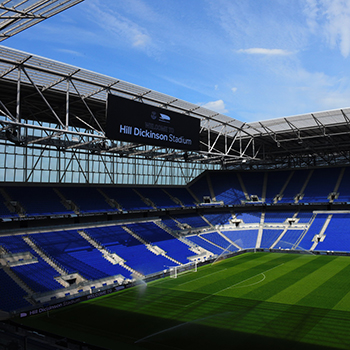
Corporate Event Photographer Liverpool - Hill Dickinson Stadium
There are worse places to photograph a corporate event than a brand-new stadium on the Liverpool waterfront. Read about a day capturing team building and networking at the Hill Dickinson.

Photographer at the Labour Party Conference
Another busy year working for an organisation that advises on public affairs, government relations and stakeholder engagement across Australia, the UK and New Zealand.
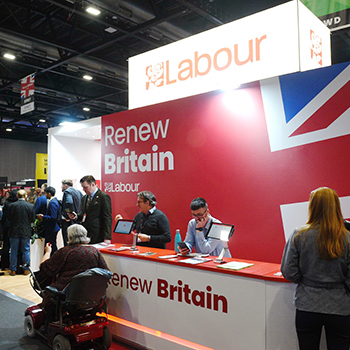
Fully Booked: Labour Party Conference Photographer
I'm delighted to say I'm now fully booked for event photography at this year's Labour Party Conference. But ready to book future commissions.
Martin, Filmmaker